
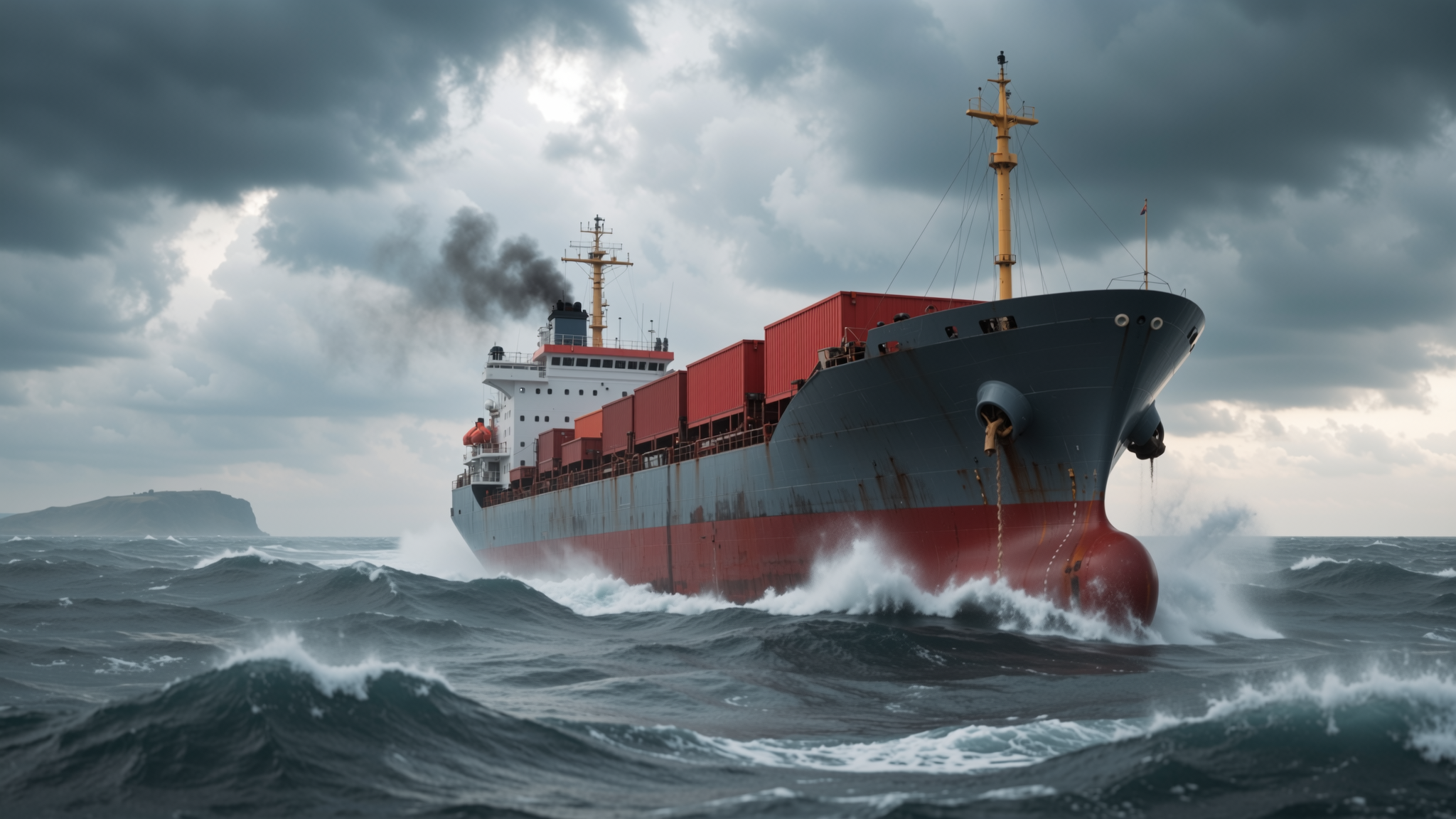
Soaring Shipping Costs: The Unbearable Burden for Chemical Companies
Chemical exporters face unprecedented pressure as maritime freight rates skyrocket. The unique characteristics of chemical logistics—bulky volumes combined with relatively low product value—make this sector particularly vulnerable. When shipping costs consume 30-40% of product value [S1], margins evaporate.
Data Impact: 2023 Global Chemical Shipping Index Analysis
The Drewry Chemical Freight Index surged 28% year-on-year in 2023, far outpacing general container indices [S1]. This divergence stems from specialized handling requirements: chemical shipments demand tank containers, increased safety protocols, and often incur premium rates due to cargo sensitivity. Unlike crude oil transported via dedicated tankers, or dry bulk commodities using charter vessels, chemical products face compounded costs from containerization and handling fees.
Cost Transmission: How Freight Eats Profit Margins
Consider titanium dioxide exports: when shipping costs jumped from $1,800 to $3,400 per 20ft container in Q4 2023, the freight-to-product-value ratio soared to 38%. One Chinese manufacturer had to abandon European orders despite 15% higher FOB prices—transport costs erased all profitability. This exemplifies how chemical companies become price takers in logistics, with limited capacity to pass costs downstream.
Crisis Decoded: The Triple Whammy of Maritime Disruptions
Three interconnected forces drive the shipping crisis: structural imbalances, geopolitical shocks, and regulatory burdens.
Capacity Imbalance: Cascading Effects of Global Container Mismatch
The chemical shipping crisis begins with fundamental equipment scarcity. Clarksons data reveals chemical tank container availability fell to 82% utilization in 2023—well above the 75% threshold where pricing pressure intensifies [S2]. This shortage stems from imbalanced global trade patterns: empty containers pile up in Western ports while Asian exporters scramble for equipment. The problem compounds for chemical shippers requiring specialized tank containers representing just 4% of global fleet capacity.
Geopolitical Tremors: Red Sea Crisis' Persistent Impact
The Red Sea disruption has disproportionately impacted chemical routes. Over 65% of Asia-Europe chemical shipments normally transit this corridor [S5]. Alternative routing around Africa adds 14-18 days transit time and $1,500-$2,000 per container in extra fuel and operational costs. More critically, extended voyages exacerbate container shortages by reducing equipment turnaround efficiency. Industry analysts project these disruptions will linger through at least Q3 2025.
Cost Pileup: Regulatory Impacts from Fuel to Carbon
Beyond base rates, chemical shippers face layered cost increases:
- IMO 2020 Low-Sulfur Fuel: Added $120-$180 per TEU
- EU ETS Carbon Tax: Phasing in at €90/ton CO2e, adding €300-€500 per Asia-Europe container by 2026 [S4]
- Environmental Surcharges: Up to $500/TEU for hazardous cargo handling
These regulatory costs hit chemical shipments hardest due to their classification as hazardous materials in 78% of cases.
Breakthrough Strategies: Corporate Playbooks in Action
Leading chemical companies deploy sophisticated countermeasures combining operational innovation, financial hedging, and technology.
Model Innovation: Wanhua's Regional Hub Strategy
Wanhua Chemical pioneered a "regional warehouse + LCL consolidation" model to mitigate ocean freight volatility. By establishing bonded warehouses in Malaysia and Turkey, they shift bulk shipments to regional hubs during low-rate periods. Local distribution then uses cost-efficient LCL (less-than-container-load) shipments. This approach cut Wanhua's European delivery costs by 27% while improving delivery reliability to 98.5% [S3].
Risk Hedging: Sinochem's Multilayered Protection
Sinochem International employs a three-tiered risk management strategy:
- Long-term Contracts: 60% of volume covered by 24-month rate locks
- Freight Futures: Hedging 30% exposure on Singapore Exchange (SGX) container derivatives
- Spot Market Optimization: Algorithmic spot procurement for remaining volume
This balanced approach delivered $48 million savings in 2023 despite market turbulence.
Technology Enablement: Intelligent Loading Optimization
BASF's CargoAI system exemplifies how algorithms maximize asset utilization. By analyzing 14 variables—from cargo density to port congestion patterns—the system achieves 93% container utilization versus industry average of 78%. For low-density chemicals like polyurethane foams, this equates to 22% more product per container. Combined with route optimization avoiding congestion ports, BASF reduced per-unit shipping costs by 18% while cutting transit times 12% [S2].
Future Navigation: Building Shock-Proof Logistics Systems
Forward-looking chemical companies are rearchitecting supply chains for resilience through diversification, multimodal solutions, and digital transformation.
Supply Chain Reconfiguration: Nearshoring Economics
Southeast Asia emerges as a strategic manufacturing alternative. While labor costs exceed China by 15-20%, total landed cost analysis shows advantages for Europe-bound chemicals: | Cost Factor | China Export | Malaysia Export | Delta | |-------------|-------------|-----------------|-------| | Production | $1.00 | $1.18 | +18% | | Ocean Freight| $0.42 | $0.28 | -33% | | Carbon Cost | $0.11 | $0.07 | -36% | | Total | $1.53 | $1.53 | 0%|
This explains why 42% of surveyed chemical firms plan regional capacity shifts by 2026.
Multimodal Solutions: China-Europe Railway Potential
The China-Europe Railway Network now transports over 700,000 TEUs annually, including specialized chemical trains with temperature-controlled containers. While currently 35% pricier than ocean freight, the 18-day transit advantage creates compelling economics for time-sensitive chemicals like specialty polymers. Rail's carbon footprint—30% lower than ocean shipping—also provides regulatory advantage under EU ETS [S4].
Digital Infrastructure: Blockchain's Emerging Role
Pilot programs demonstrate blockchain's potential to streamline chemical logistics:
- Documentation: 70% faster customs clearance via smart contracts
- Compliance: Automated hazardous material reporting
- Payment: 45-day financing terms secured by shipment milestones Early adopters report 30% administrative cost reductions and 50% faster payment cycles.
Conclusion: From Cost Center to Strategic Asset
The chemical shipping crisis demands fundamental mindset shifts. Leading companies no longer view logistics as mere cost to minimize, but as strategic capability requiring systematic investment. Building shock-resistant supply chains necessitates:
- Predictive Intelligence: Integrated market monitoring and scenario modeling
- Contract Architecture: Blended long-term/short-term rate structures with flexibility triggers
- Network Diversification: Regional hubs, multimodal options, and nearshoring alternatives
- Digital Backbone: Blockchain, AI optimization, and IoT monitoring
As transport costs become permanent structural elements in chemical economics, companies mastering logistics resilience will gain sustainable competitive advantage.
Engage with Us
What innovative approaches is your organization exploring to navigate chemical shipping challenges? Share your experiences below.

