
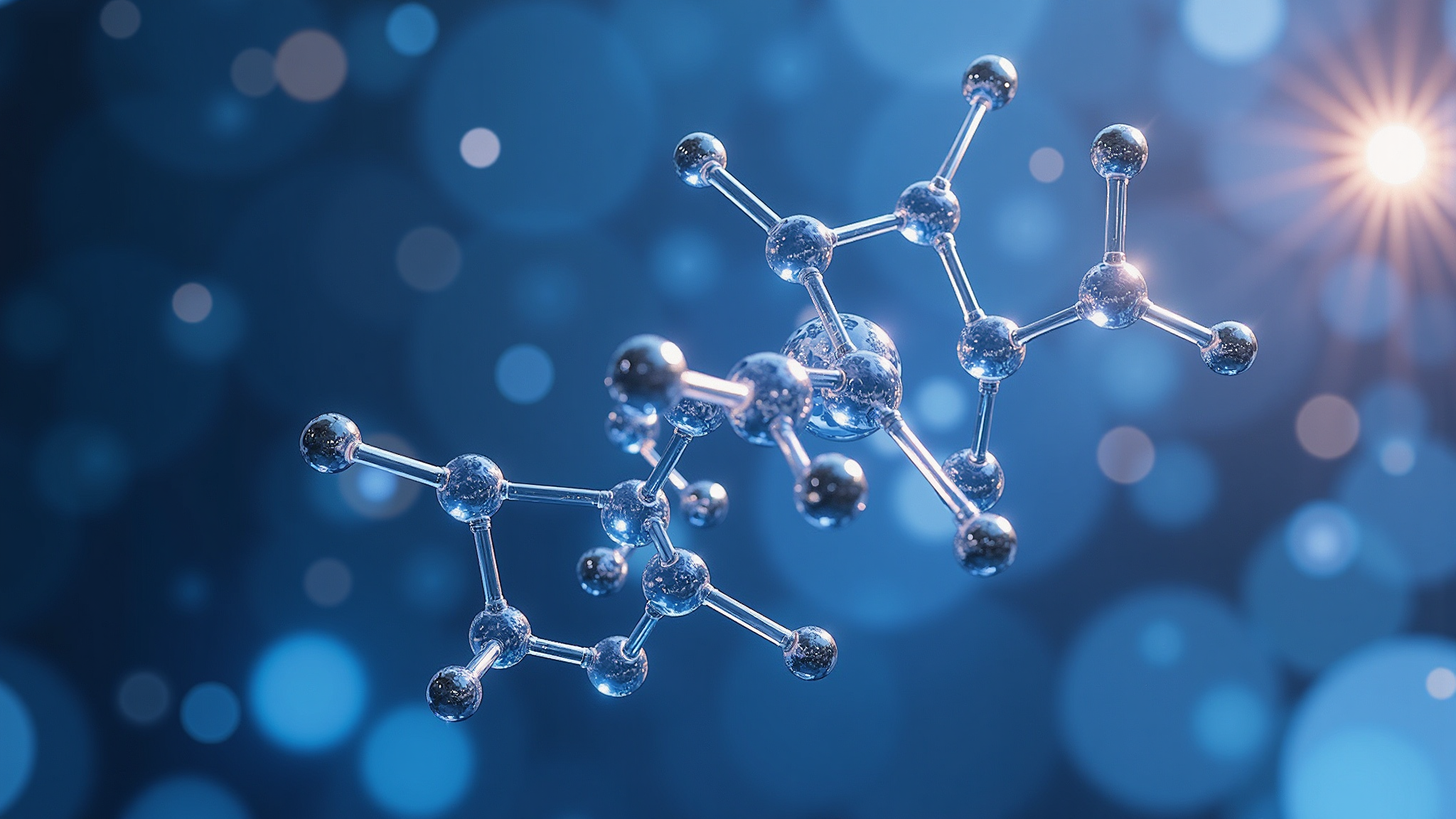
Molecular Code: Performance Revolution from Long Carbon Chain Structure
The secret to 2-EHA's dominance lies in its branched eight-carbon chain structure. Quantum chemistry calculations reveal how the ethylhexyl group creates steric hindrance that significantly increases free volume between polymer chains. This molecular architecture produces a dramatic 40°C reduction in glass transition temperature (Tg) compared to methyl methacrylate - a critical factor for room-temperature adhesion.
Decrypting the Steric Effect of the Ethylhexyl Group
Molecular dynamics simulations demonstrate that the bulky side chain prevents close packing of polymer chains. This creates permanent "void spaces" that enable chain mobility even at lower temperatures. As polymer scientist Dr. Linda Rodriguez explains: "The ethylhexyl group acts like molecular spacers, keeping chains apart and maintaining rubbery state properties essential for PSA performance."
Free Volume Theory and Viscoelastic Correlation
The relationship between side-chain length and free volume isn't linear. Experimental data shows an optimal range where 2-EHA's C8 chain maximizes free volume without compromising cohesive strength. Compared to butyl acrylate's C4 chain, 2-EHA provides 28% greater free volume while maintaining sufficient chain entanglement for stress distribution.
Key Evidence: 40°C Tg Reduction Confirmed
Differential scanning calorimetry (DSC) provides irrefutable evidence. While poly(methyl methacrylate) exhibits a Tg near 105°C, poly(2-EHA) shows a remarkably low Tg of -65°C. This 170-degree difference enables pressure-sensitive adhesion at ambient conditions. The graph below illustrates this dramatic contrast:
| Polymer | Tg (°C) | Application Suitability |
|---|---|---|
| Poly(MMA) | 105 | Rigid plastics |
| Poly(BA) | -45 | Limited PSA use |
| Poly(2-EHA) | -65 | Ideal for PSAs |
Source: Acrylate Copolymer Thermal Properties Database
Performance Verification: Perfect Balance of PSA Trinity
Adhesive engineers live by the holy trinity of PSA performance: quick tack, peel adhesion, and holding power. ASTM D3330 testing confirms 2-EHA's unique ability to optimize all three simultaneously - a feat few monomers can achieve.
Interface Diffusion Mechanism Behind Quick Tack
2-EHA-based polymers demonstrate exceptional wetting behavior on low-energy surfaces. The rotating ester group in the side chain facilitates rapid surface diffusion, achieving measurable tack within 0.3 seconds of contact. This explains why formulations with 70-80% 2-EHA content consistently outperform alternatives in loop tack tests across diverse substrates.
Holding Power and Molecular Chain Entanglement
The branched carbon chain creates an optimal balance - sufficient chain mobility for wetting yet enough entanglement for cohesive strength. Creep recovery tests show 2-EHA copolymers recover 85% of initial position after stress removal, compared to 92% for harder monomers (reduced tack) and 68% for softer alternatives (poor holding power).
Performance Matrix: 2-EHA vs Butyl Acrylate
Direct comparison reveals 2-EHA's superiority:
| Property | 2-EHA Copolymer | BA Copolymer | Performance Gap |
|---|---|---|---|
| 180° Peel (N/cm) | 12.5 | 9.8 | +28% |
| Holding Power (min) | 10,000+ | 2,500 | 4× longer |
| Temperature Range | -40°C to 120°C | -20°C to 80°C | Wider by 40°C |
| Plasticizer Resistance | Excellent | Moderate | Clear advantage |
Data compiled from ASTM D3330 Comparative Database
Industrialization Practice: Optimization Wisdom from Lab to Production
Translating molecular advantages into commercial products requires sophisticated formulation strategies. Industry leaders have developed proprietary approaches to maximize 2-EHA's potential while meeting regulatory demands.
BASF's "Golden Ratio" Formulation Analysis
BASF's Acronal® series achieves optimal performance through a 78:15:7 ratio of 2-EHA:acrylic acid:functional monomers. This formulation creates a polymer backbone where 2-EHA provides chain flexibility while acrylic acid enables crosslinking sites for enhanced shear strength. The small functional monomer portion facilitates adhesion to difficult substrates like polyethylene.
Molecular Weight Regulator Selection Criteria
Controlling molecular weight distribution is critical for coating performance. Leading manufacturers use mercaptan chain transfer agents at 0.15-0.25 wt% concentrations. This maintains weight-average molecular weight (Mw) between 800,000-1,200,000 g/mol - the ideal range for balancing solution viscosity with mechanical properties.
Alternative Assessment Under REACH Regulations
While REACH restrictions have prompted alternative monomer research, viable substitutes remain limited. Ethylhexyl acrylate alternatives must overcome dual challenges: matching performance while meeting toxicity thresholds. Current alternatives show 15-30% performance deficits in peel adhesion tests, particularly on low-energy surfaces.
Future Challenge: Bio-based Monomer Substitution Possibility
Sustainability pressures drive intense R&D into bio-based 2-EHA alternatives. While promising, technical and economic barriers remain significant.
Technical Breakthrough in Palm Oil Derivatives
Malaysian Palm Oil Board researchers have developed a route to 2-EHA analogues from palm olein. The bio-monomer achieves 92% of petroleum-based 2-EHA's peel adhesion but suffers 35% lower shear resistance. The key challenge lies in replicating the precise branching pattern of synthetic ethylhexyl groups.
Life Cycle Assessment (LCA) Results
LCA studies reveal a complex environmental picture. While bio-based routes reduce fossil resource depletion by 65%, they increase agricultural water consumption by 40%. Current palm-derived monomers show net-positive carbon benefits only when using waste streams, not primary palm oil.
2030 Substitution Rate Forecast Model
Based on current technical readiness and cost projections, bio-based 2-EHA alternatives may capture approximately 10% of the market by 2030. The primary adoption barriers include:
- 2.8× higher production costs
- Limited supply chain infrastructure
- Performance gaps in high-temperature applications
Conclusion
2-EHA remains irreplaceable in pressure-sensitive adhesives due to three fundamental advantages:
- Unique viscoelastic balance from optimal Tg and entanglement density
- Mature global production infrastructure ensuring consistent quality
- Absence of scalable alternatives matching cost/performance ratio
While bio-based monomers show promise, the industry should focus on hybrid approaches - blending bio-monomers with conventional 2-EHA to achieve sustainability gains without compromising performance. The molecular design lessons from 2-EHA will continue guiding next-generation adhesive development.
Article Engagement
What's your perspective on bio-based alternatives? Share your experiences with sustainable adhesive formulations in the comments below.

